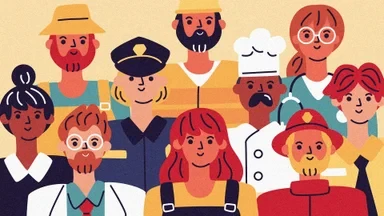
One of the most pervasive overlooked blind spots of our modern era is that we almost never pose the inverse question with the same level of seriousness: why are we doing so little to attract more men into professions long dominated by women?
We have a critical unmet need for far more men working in care-focused professions: nursing, teaching, social work, child care, elder care, and community and patient support services. The gender gap that deserves far more public attention is not only the underrepresentation of women in artificial intelligence and tech roles. It is the equally stark gap of men missing from the care economy.
Across advanced economies, the occupations facing the most severe, persistent labor shortages are most often fields long dominated by women. Nursing, in-home care, child care, teaching, elder care, disability support and social work are already operating under extreme strain in most countries around the world. Population aging will dramatically intensify this shortage in the coming decades. As societies grow older, demand for care work increases at a fundamental structural level.
Yet even now, when people talk about “the jobs of the future,” public imagination still automatically turns to technology. This holds true even amid rising neo-Luddite skepticism that questions whether the tech sector will continue to generate large numbers of quality jobs at all.
In reality, our most pressing recruitment needs are far less futuristic than popular discourse suggests. These are jobs we have known and relied on for generations: nurses, teachers, caregivers, therapists, and home health aides. Technology can assist these workers in their roles, but it will never replace the human attention, empathy, critical judgment, and emotional reassurance that these professions require at their core.
Put simply, many of the most important jobs of tomorrow are roles that have long been treated as secondary, lower-status work. And by an overwhelming margin, these roles are held primarily by women.